
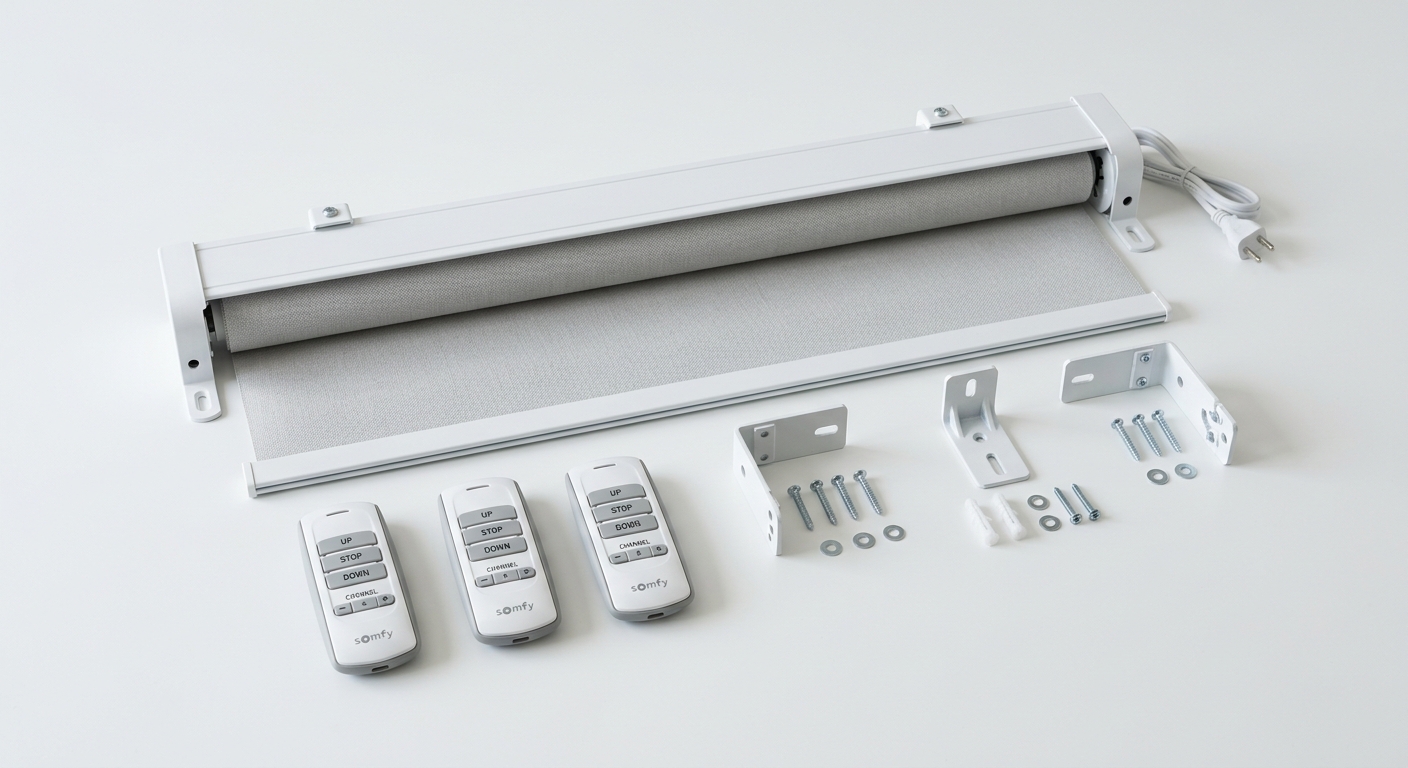
Solar shades solve a specific problem that standard shades don't: reducing heat and UV without fully blocking the outdoor view or making a room feel closed off during the day — a genuinely relevant feature in a climate where cooling costs dominate the energy bill for most of the year.
How Solar Shade Fabric Works
Solar shade fabric is woven with a specific density (called "openness factor," typically expressed as a percentage) that determines how much light and heat pass through versus how much is blocked or reflected. A lower openness factor (like 1-3%) blocks more heat and light while still allowing some outward visibility; a higher openness factor (10%+) allows more natural light and view but blocks less heat.
Why This Matters in Florida
Florida homes with significant west or south-facing glass take on substantial solar heat gain during peak afternoon hours, directly increasing AC runtime and cost. Solar shades address this at the window — before heat enters the room — rather than relying entirely on the AC system to remove heat after it's already inside. This is a meaningfully different (and often more efficient) approach than simply running the AC harder.
Openness Factor and Room Use
- 1-3% openness — maximum heat/glare block, best for home offices, media rooms, or rooms with severe afternoon sun exposure, at the cost of more view obstruction.
- 5% openness — a common middle-ground choice balancing heat block with a reasonably clear outward view.
- 10%+ openness — prioritizes natural light and view, with more modest heat reduction — a better fit for rooms with less severe sun exposure or where the view itself is a priority.
Color and Heat Reflection
Lighter-colored solar shade fabrics reflect more heat and light than darker colors, which absorb more heat even at the same openness factor. For rooms with the most intense sun exposure, a lighter fabric color paired with a lower openness factor typically delivers the best heat reduction, though this is a genuine tradeoff against interior glare from the lighter fabric itself.
Combining With Other Shade Types
Many homeowners pair solar shades (for daytime heat/glare control while maintaining a view) with a blackout or room-darkening shade on the same window for full darkness at night — a dual-shade setup accomplishing both goals from one window rather than requiring a compromise fabric that does neither job particularly well.
Automation for Sun Tracking
Motorized solar shades scheduled to lower during peak afternoon sun hours (rather than left in a fixed position or requiring manual adjustment) capture the heat-reduction benefit consistently rather than depending on someone remembering to adjust them at the right time each day.
The Bottom Line
Solar shades are one of the more practical energy-conscious upgrades for Florida homes specifically because they address heat gain at the source, and choosing the right openness factor and color for each room's actual sun exposure matters more than defaulting to a single fabric choice throughout the house.