
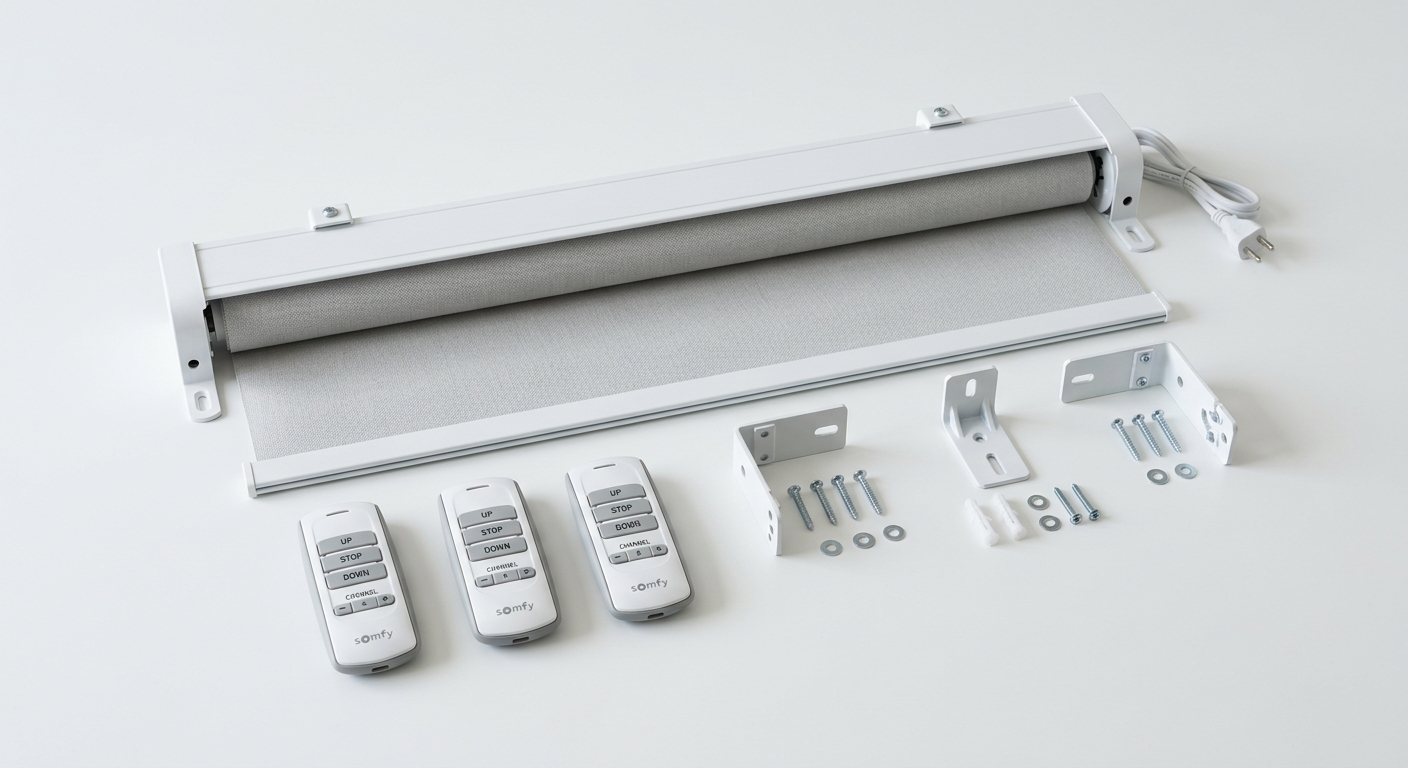
Motorized shades cover a wider range of products than most homeowners expect going in — the right choice depends on the room, the amount of light control needed, and the look you're going for.
Shade Types
- Roller shades — the most common style, a single fabric roll that raises/lowers on a headrail-mounted tube. Wide range of fabric opacities from sheer to blackout, and the most straightforward to motorize.
- Cellular (honeycomb) shades — a layered cell structure that provides genuine insulation value in addition to light control, particularly relevant for west-facing rooms with strong afternoon sun exposure common in Florida homes.
- Roman shades — fold rather than roll, a more design-forward option often chosen for its fabric drape and appearance; motorization is available but less common than roller or cellular.
- Dual shades — combine a sheer/light-filtering layer and a blackout layer on the same headrail, motorized independently or together, giving more flexible light control from one window treatment.
Fabric and Opacity
- Sheer/light-filtering — diffuses light while maintaining some view and natural brightness; minimal privacy.
- Screen fabrics — block UV and reduce heat gain while maintaining an outward view during the day (though privacy is reduced at night with interior lights on).
- Room-darkening — blocks most light while maintaining a small amount of light filtering at the fabric edges.
- Blackout — near-total light block, common for bedrooms, media rooms, and home theaters.
Control Options
Motorized shades are typically controlled through a dedicated remote, an app, in-wall keypads, or full integration with a broader smart home platform. Battery-powered motors avoid wiring but require periodic recharging (frequency depends on usage and shade size); hardwired motors eliminate battery management at the cost of running power to each shade location during installation.
Room-by-Room Considerations
Living areas with significant window area benefit from screen or light-filtering fabrics that manage heat and glare without fully blocking the outdoor view during the day. Bedrooms more commonly use blackout or dual shades for sleep quality. Media rooms and home theaters typically use blackout shades on any automation scene tied to "movie time," dropping automatically alongside dimmed lighting.
Why Motorize at All
Beyond convenience, motorized shades commonly get justified by automated sun protection (scheduled to close during peak afternoon sun, reducing cooling load on the AC system), automated privacy at night, and solving access problems for hard-to-reach windows — high transoms and large sliding door walls that manual shades simply can't practically serve.
The Bottom Line
The right shade type and fabric depends on the specific room's light, privacy, and temperature control needs — a whole-home shade project benefits from planning fabric and shade type room by room rather than choosing one style for the entire house.